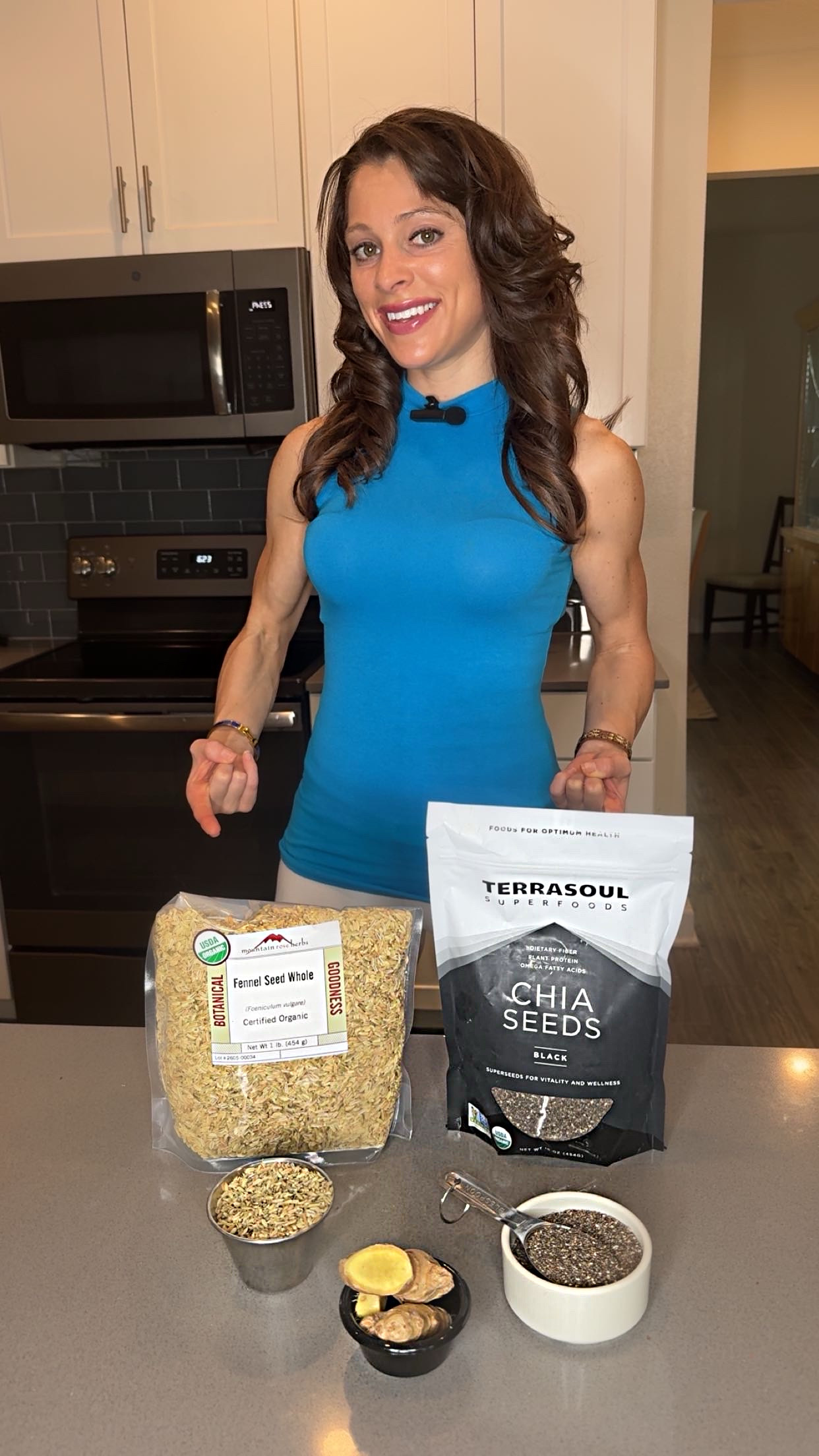
Bloating advice is everywhere and most of it is useless. Here's are my top 5 de-bloat hacks with the most evidence. The last one is probably the most important!
1. Ginger
Not the candy, not the ale. A 1-inch chunk of real root, grated into hot water, blended into a smoothie, or chewed straight off the knob.
Ginger is a prokinetic, meaning it speeds up how fast your stomach empties. Less time sitting, less time for bacteria to ferment your food into gas.
What the research shows:
- In a randomized double-blind trial, 24 volunteers took 1200 mg of ginger or placebo before a test meal. Gastric half-emptying time dropped from 26.7 minutes to 13.1 (P < .01), with more frequent antral contractions.¹
- One caveat worth knowing: those were healthy volunteers with no baseline symptoms, and the authors reported no significant difference in any GI symptoms.¹ There was nothing there to improve.
- In people who actually had GI complaints, it holds up. A 12-week double-blind placebo-controlled trial used 500 mg three times daily with meals and found significant reductions in constipation and nausea, plus bloating severity (P = .047).²
How to use it: roughly a 1-inch piece of fresh root. Take it before the meal, not after. In the trial protocol it was dosed about an hour ahead.¹
2. Fennel Seeds After Dinner
One teaspoon. Chew them, suck the juices, spit the seeds.
Fennel oil is a classic carminative, meaning it reduces gas in the GI tract. The proposed mechanism is antispasmodic activity on gut smooth muscle. Many Indian restaurants keep a bowl by the door. They figured this out centuries before we had the science to back it up.
What the research shows:
- A randomized trial gave IBS patients fennel essential oil paired with a low dose of curcumin (turmeric), or placebo, for 30 days. The combination cut IBS symptoms including abdominal pain and bloating by roughly half, close to double placebo, with 26% of participants fully symptom free.³
Two things to know before you get excited:
- The trial used fennel oil in a capsule, alongside curcumin. It doesn't isolate fennel and it doesn't test chewing seeds.
- It ran a full month. Chewing seeds can bring quick relief, but that isn't what was measured.
How to use it: about a teaspoon of seeds chewed after dinner. It's the cheap traditional version of the same idea. Give it more than one dinner before you judge it.
3. Chia
One part chia to four parts liquid (1 tbsp chia + ¼ cup almond milk), soaked at least an hour, overnight is better.
The gel is a viscous soluble fiber that hydrates and keeps things moving through your GI tract.⁴
Where I'll be straight with you:
- There is no randomized trial of chia alone for bloating. The supporting citation is a fiber mechanics review, not a chia study.⁴
- Chia is fermentable. If your bloating is fermentation-driven, adding more fermentable fiber can make it worse. That's not failure, that's information.
How to use it: start at 1 tablespoon, work up to 2. I've had clients jump straight to 3 and text me at midnight because their stomach hurts.
One safety note: never eat chia dry and chase it with water. There's a reported case of esophageal impaction that took prolonged endoscopy to clear.⁵
4. Walk 10 Minutes After You Eat
Nothing intense, that backfires. A gentle stroll.
This is the strongest evidence on the list, and it's free.
What the research shows:
- 94 people with functional abdominal bloating were randomized either to a 10–15 minute walk after every meal, or to daily domperidone plus activated dimethicone.⁶
- Over 4 weeks, both groups improved significantly on belching, flatus, postprandial fullness, gas incontinence and abdominal discomfort (P < .001).⁶
- Between-group differences were mostly non-significant, except postprandial fullness and bloating, where walking beat the medication (P = .002).⁶
The mechanism isn't mysterious: movement speeds up how fast your gut moves food through and clears gas.
The limitations are real: small trial, self-reported outcomes, nobody blinded, single center. Also free, no risk, ten minutes. The risk-to-reward math makes a strong case for a 10 minute walk after meals.
5. Actually Test
If you've been bloated for more than a month, a 1-inch chunk of ginger root is not going to cut it.
Everything above can help your symptoms significantly. None of it tells you why, and none of it is a standalone root cause solution. Past about a month, the why matters more than the relief does.
That takes a proper gut test, and there's a very specific reason your doctor probably won't order one. I'm breaking that whole thing down in an upcoming post.
A quick note on the technology, since it matters:
- Cheaper direct-to-consumer kits use 16S rRNA sequencing. Useful overview, limited resolution.
- Shotgun metagenomic sequencing reads all the DNA in the sample. One study ran 156 human stool samples through both methods and compared them at species, genus and family level.⁷ Shotgun gives better species resolution plus functional gene annotation, meaning not just who's present but what they're equipped to do.
Red Flags
Bloating that's new, getting worse, or showing up with unintentional weight loss, rectal bleeding or early satiety needs medical evaluation before any self-directed protocol. A stool test doesn't rule out what those symptoms require ruling out.
If something more serious might be going on, I can point you in the right direction.
One Last Thing
The research on ginger, fennel, chia, all of it, is not unanimous. Some studies land, some don't, and most were run in populations that may look nothing like you. Published evidence establishes plausibility and direction. It does not predict your response.
We're all unique individuals. Try it and watch what your body actually says.
The gut is a complicated playground, and working with someone who knows it can save you a lot of time, money, and frustration.
Have a question? [Ask me here] or [shoot me a DM on IG]
References
- Wu KL, Rayner CK, Chuah SK, et al. Effects of ginger on gastric emptying and motility in healthy humans. Eur J Gastroenterol Hepatol. 2008;20(5):436-440. PMID 18403946.
- Foshati S, Poursadeghfard M, Heidari Z, Amani R. The effects of ginger supplementation on common gastrointestinal symptoms in patients with relapsing-remitting multiple sclerosis: a double-blind randomized placebo-controlled trial. BMC Complement Med Ther. 2023;23(1). doi:10.1186/s12906-023-04227-x. PMID 37891539.
- Portincasa P, Bonfrate L, Scribano ML, et al. Curcumin and fennel essential oil improve symptoms and quality of life in patients with irritable bowel syndrome. J Gastrointestin Liver Dis. 2016;25(2):151-157. PMID 27308645.
- McRorie JW Jr, McKeown NM. Understanding the physics of functional fibers in the gastrointestinal tract: an evidence-based approach to resolving enduring misconceptions about insoluble and soluble fiber. J Acad Nutr Diet. 2017;117(2):251-264. PMID 27863994.
- Rawl RE, Ahmed AM, Aguilar D, Kaza S, Norton HJ. Watch it grow: esophageal impaction with chia seeds. Presented at: American College of Gastroenterology Annual Scientific Meeting; October 2014; Philadelphia, PA.
- Hosseini-Asl MK, Taherifard E, Mousavi MR. The effect of a short-term physical activity after meals on gastrointestinal symptoms in individuals with functional abdominal bloating: a randomized clinical trial. Gastroenterol Hepatol Bed Bench. 2021;14(1):59-66. PMCID PMC8035544.
- Bars-Cortina D, Ramon E, Rius-Sansalvador B, et al. Comparison between 16S rRNA and shotgun sequencing in colorectal cancer, advanced colorectal lesions, and healthy human gut microbiota. BMC Genomics. 2024;25(1):730. doi:10.1186/s12864-024-10621-7. PMID 39075388